
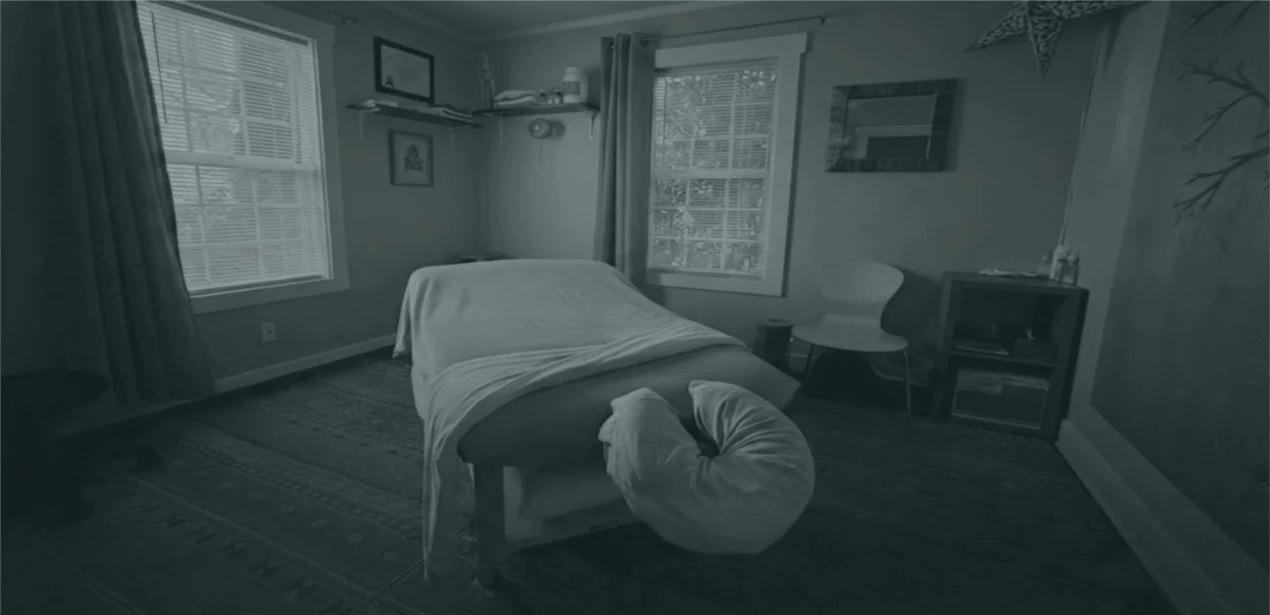
Cupping in NE Portland
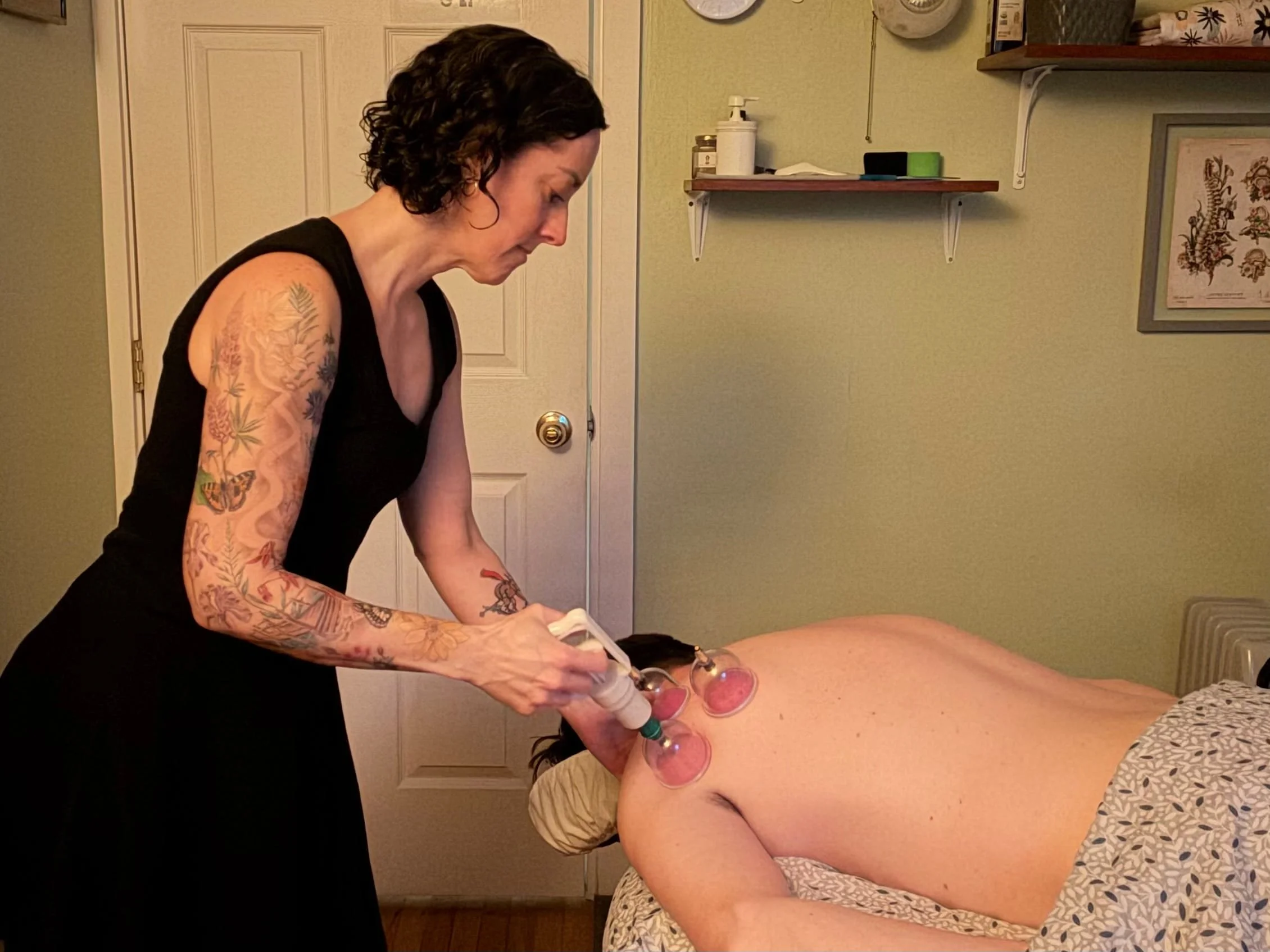
Cupping therapy uses gentle suction applied to the skin to help lift and decompress underlying tissue. This can improve circulation, reduce muscular tension, and support mobility in areas that feel restricted or tight.
In my NE Portland practice, I use plastic cups with a controlled vacuum, which allows me to adjust the intensity very precisely. This makes it possible to work effectively while staying within your comfort level and adapting the treatment to what your body needs.
Cupping works differently than most massage techniques. Rather than applying pressure into the tissue, it creates space by lifting and separating layers of muscle and fascia. This decompression can reach areas of restriction that are difficult to address through compression alone, making it a useful complement to other techniques or an effective approach on its own when tissue is particularly dense or congested.
Cupping is often used alongside massage to help release tension in a different way than direct pressure. By lifting the tissue instead of compressing it, cupping can help improve movement, reduce areas of congestion, and is especially effective when working with scar tissue and areas of adhesion.
How Cupping Is Used
Cupping is incorporated into treatment when it may be beneficial for the area being worked. It tends to be most useful when tissue feels stubborn or layered in a way that doesn't fully release with hands-on pressure. This is common in the upper back, along the spine, through the hips, and in the IT band or calves.
It may be used to:
Loosen areas of dense or stubborn tension
Improve circulation in restricted tissue
Support mobility in areas that feel tight or limited
Help soften and mobilize scar tissue
Reduce discomfort in areas that do not respond well to direct pressure
Because the suction can be adjusted, treatment remains controlled, targeted, and comfortable.
“Steph is informative, centered, communicative, and beyond all PRODUCTIVE! Her technique is skillful, knowledgeable, builds on itself and is inspirational. If you want to truly be em-bodied, and understand what that means fully, please seek her out, drink a ton of water, and embrace the mobility that is gifted to you.”
— Brittany M.What to Expect
Cupping may create temporary marks or discoloration on the skin, which can last several days depending on the individual and the intensity used. These marks are not bruises, but a response to increased circulation in the area. Not all sessions result in visible marks, and the intensity can be adjusted based on your preference.
If you're concerned about marks for an upcoming event or occasion, please let me know before we begin. I can adjust the intensity or focus on areas that are less visible.
Treatment is always applied in a way that supports your goals while staying within your comfort level.
Cupping Can Help With
Muscle tightness and restriction
Limited range of motion
Areas of chronic tension
Postural tightness
Scar tissue and adhesions
Muscle soreness from training or repetitive activity
Regions that feel “stuck” or resistant to other techniques
Frequently Asked Questions
Does cupping hurt?
It shouldn't. The suction is adjustable, so intensity is always calibrated to your comfort level. Some people describe a pulling or stretching sensation, which most find tolerable or even relieving. If anything feels too intense, the cups can be adjusted or removed immediately.
What are the marks I've heard about, and will I get them?
Cupping can create temporary discoloration on the skin that may last a few days. These aren't bruises — they're a response to increased circulation in the tissue. Not everyone gets visible marks, and the intensity can be kept lower to reduce the likelihood if that's a concern. If you have an event coming up where marks would be a problem, just mention it beforehand so we can plan accordingly.
How is cupping different from massage?
Most massage techniques work by applying pressure into the tissue. Cupping does the opposite — it lifts and decompresses the tissue, creating space between layers of muscle and fascia. This makes it useful for areas that don't fully respond to pressure-based work, and for reaching congestion that's deeper or more layered.
Can cupping help with scar tissue?
Yes — it can be particularly effective for softening and mobilizing scar tissue and adhesions. The decompression created by suction helps lift and separate layers that have become stuck together, which is difficult to address through compression alone.
What areas of the body is it most commonly used on?
It tends to be most useful in areas that carry dense or layered tension — the upper back, along the spine, through the hips, the IT band, and the calves. That said, it can be applied wherever it would benefit the work.
How do I book?
Sessions are available online. If you have questions about whether cupping would be a good fit, feel free to reach out before booking.