
TMJ Disorder Massage in Portland
TMJ Disorder massage focuses on relieving pain and tension associated with temporomandibular joint disorder, a condition that can cause jaw pain, facial tension, headaches, and discomfort in the neck and shoulders. Some people also experience clicking, popping, or restricted movement in the jaw.
TMJ Disorder often develops from clenching, grinding, stress, dental procedures, or muscular imbalances affecting the jaw and surrounding areas.
It is more common than many people realize, and massage is often an underutilized option for managing it. While some people pursue night guards, dental treatment, or physical therapy, muscular tension is frequently a significant driver of symptoms and it generally responds well to hands-on work. For many clients, addressing the jaw muscles directly produces noticeable relief that other approaches haven't fully provided.
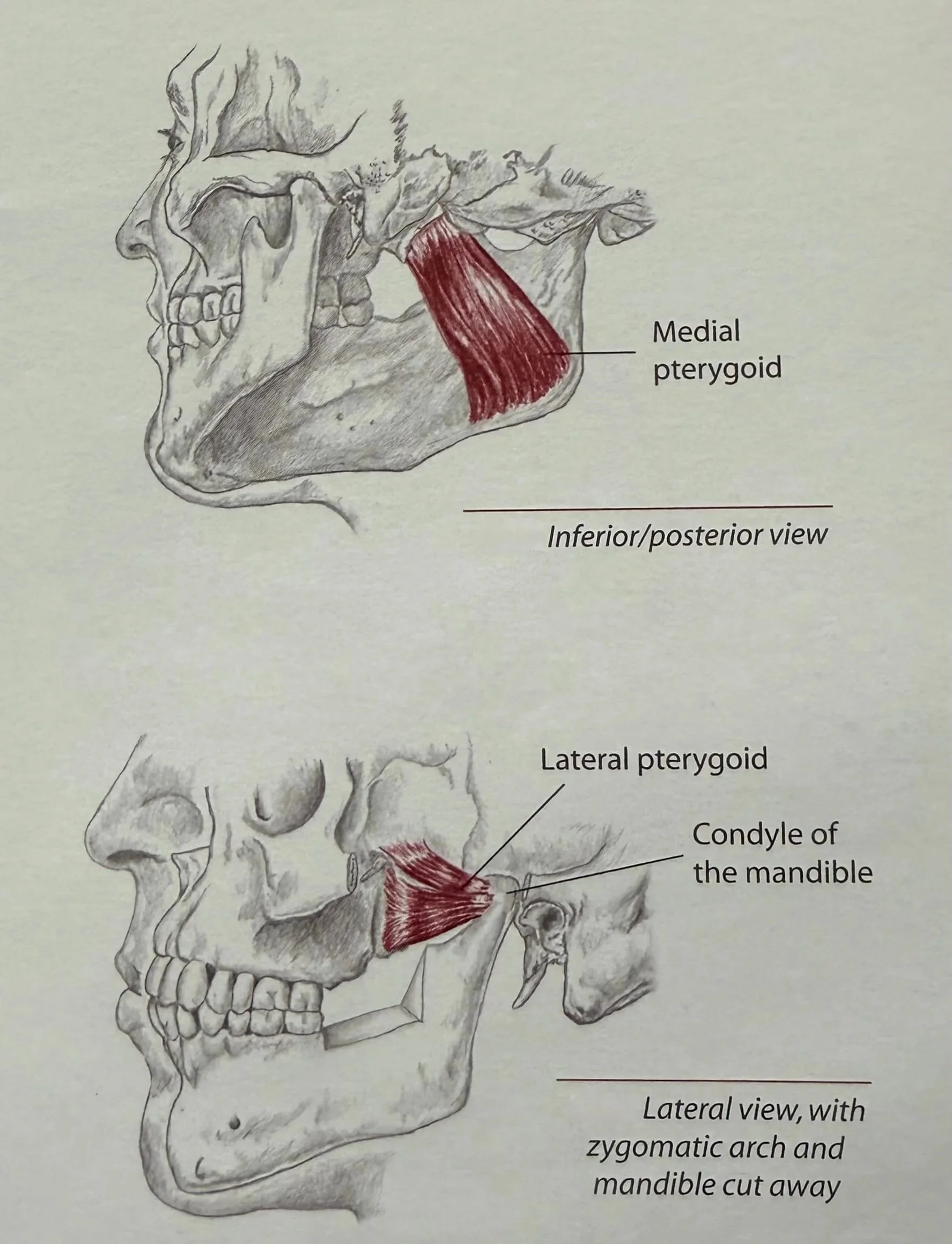
In my practice, treatment focuses on releasing tension in the muscles that control jaw movement, including the masseter, temporalis, and pterygoid muscles, along with the surrounding muscles of the face, neck, and upper shoulders that influence jaw function. Using techniques such as myofascial work and targeted muscle treatment, TMJ Disorder massage helps reduce muscular tension and supports more natural movement of the jaw.
When appropriate, treatment may also include intra-oral work, which involves gloved massage inside the mouth to access deeper jaw muscles that cannot be reached externally. This allows treatment of muscles such as the pterygoids, which play an important role in jaw movement.
TMJ Disorder treatment is always performed gradually and within your comfort level. I will never push you beyond what feels comfortable, and intra-oral work is only performed with your consent and when it may be beneficial for your treatment.
If you're in Portland and have been dealing with jaw pain, chronic headaches, or facial tension without a clear path to relief, TMJ-focused massage may be worth exploring as part of your care.
TMJ Disorder Massage Can Help With
Jaw pain and tightness
Clicking or popping in the jaw
Teeth grinding or clenching
Facial muscle tension
Ear and temple discomfort
Neck and shoulder tension related to jaw strain
Restricted jaw movement or difficulty opening the mouth
“I've been coming to Steph for three years for managing chronic pain and she is fantastic. I cannot recommend her enough. She has helped me manage ongoing pain in my back and neck, as well as targeting various other problems as they come up, from post-workout tightness to more unusual things.
Recently, the chronic pain from my neck started working its way up through my jaw, leading to teeth clenching, tension headaches and more frequent migraines. Steph started working intra-oral massage into our regular visits and the results were immediate.
We've been able to reverse that creeping tightness and the resulting pain and headaches and have been able to manage it before it has a chance to get bad again. On top of all that, Steph is incredibly kind and thoughtful and I'm grateful to have her as part of my care team.”
~ Lauren G.
TMJ Disorder, Headaches, and Migraines
TMJ Disorder is often associated with tension headaches and migraines. The muscles that control jaw movement, particularly the masseter, temporalis, and pterygoids, can create significant tension in the temples, face, and sides of the head when they become chronically tight.
This connection is often overlooked because people don't always associate jaw tension with head pain, but the masseter alone is one of the most powerful muscles in the body relative to its size, and chronic overuse from clenching or grinding creates a significant tension load through the whole surrounding region.
Many people who experience migraines also carry tension in the jaw, neck, and upper trapezius, which can aggravate headache patterns. By releasing tension in these areas, TMJ Disorder massage can help reduce pressure through the temples and surrounding muscles that contribute to headache discomfort.
Treatment may include work through the jaw muscles, temples, neck, and upper trapezius, addressing the muscular patterns that often accompany both TMJ Disorder and chronic headaches.
Booking a Session
TMJ-focused sessions are available for 60 minutes. For new clients dealing with significant jaw pain or chronic headache patterns, this allows time to work through the jaw muscles as well as the neck, head and upper shoulders that typically contribute to the overall picture. Booking a 90 minute or 2 hour session will allow extra time for other areas or even full-body massage if the client has additional areas which need time.
Some clients find relief within a few sessions; others incorporate regular TMJ work into ongoing treatment for long-term management. If you're in Portland and have questions about whether this treatment is right for what you're experiencing, feel free to reach out before booking.
Muscles Commonly Treated
Masseter
Temporalis
Pterygoid muscles
Sternocleidomastoid (SCM)
Upper trapezius
Muscles of the neck and upper back
Frequently Asked Questions
Is massage an effective treatment for TMJ Disorder?
It can be, particularly when muscular tension is a significant driver of symptoms. While some people pursue night guards, dental work, or physical therapy, those approaches don't always address the muscular component directly. For many people, working on the jaw muscles and surrounding structures produces noticeable relief that other treatments haven't fully provided.
What muscles are treated during a TMJ session?
Treatment focuses on the muscles that control jaw movement — primarily the masseter, temporalis, and pterygoids — along with the surrounding muscles of the face, neck, and upper shoulders that influence how the jaw functions. Because these areas are all connected, addressing the broader pattern often produces better results than working on the jaw alone.
What is intra-oral massage, and will it be used in my session?
Intra-oral massage involves gloved work inside the mouth to access deeper jaw muscles — particularly the medial and lateral pterygoids — that can't be reached from the outside. It's only performed with your explicit consent and only when it would genuinely benefit your treatment. Nothing will happen without a clear conversation first, and the work is always done gradually and within your comfort level.
I have chronic headaches or migraines — could my jaw be involved?
It's worth considering. The muscles that control jaw movement, especially the masseter and temporalis, can create significant tension through the temples, face, and sides of the head when they're chronically overloaded from clenching or grinding. Many people with migraine patterns also carry tension in the jaw, neck, and upper shoulders, and releasing that tension can help reduce the frequency or intensity of headaches. The connection between jaw tension and head pain is often overlooked precisely because people don't associate the two.
I don't have a formal TMJD diagnosis — can I still book?
Of course! If you're experiencing jaw pain, facial tension, clicking or popping in the jaw, temple discomfort, or chronic headaches, you don't need a formal diagnosis to explore whether massage might help. If you're unsure whether what you're dealing with is a good fit, feel free to reach out before booking.
Will the treatment be painful?
It should not be. The jaw and surrounding muscles can be sensitive, especially when there's significant tension present, but treatment is always performed gradually and calibrated to your comfort. The goal is productive work within a tolerable range — not pushing through pain.
How many sessions will I need?
It varies. Some people notice meaningful relief within a few sessions. Others incorporate regular TMJ work into ongoing treatment for long-term management, particularly if clenching or grinding is habitual or stress-related. A clearer picture usually emerges after the first few sessions.
How long should I book for my first session?
I offer 60 minutes for a specifically focused session. This includes treatment of the head, neck, face and jaw, and will include intra-oral work if both myself and the client feels it is appropriate. If you have other areas that need time or would like to incorporate a full-body session, 90 or 120 minutes are also available.
How do I book?
Sessions are available online in 60, 90 and 120 minutes. If you have questions about whether this treatment is right for what you're experiencing, feel free to reach out before booking.