
Gua Sha in Portland
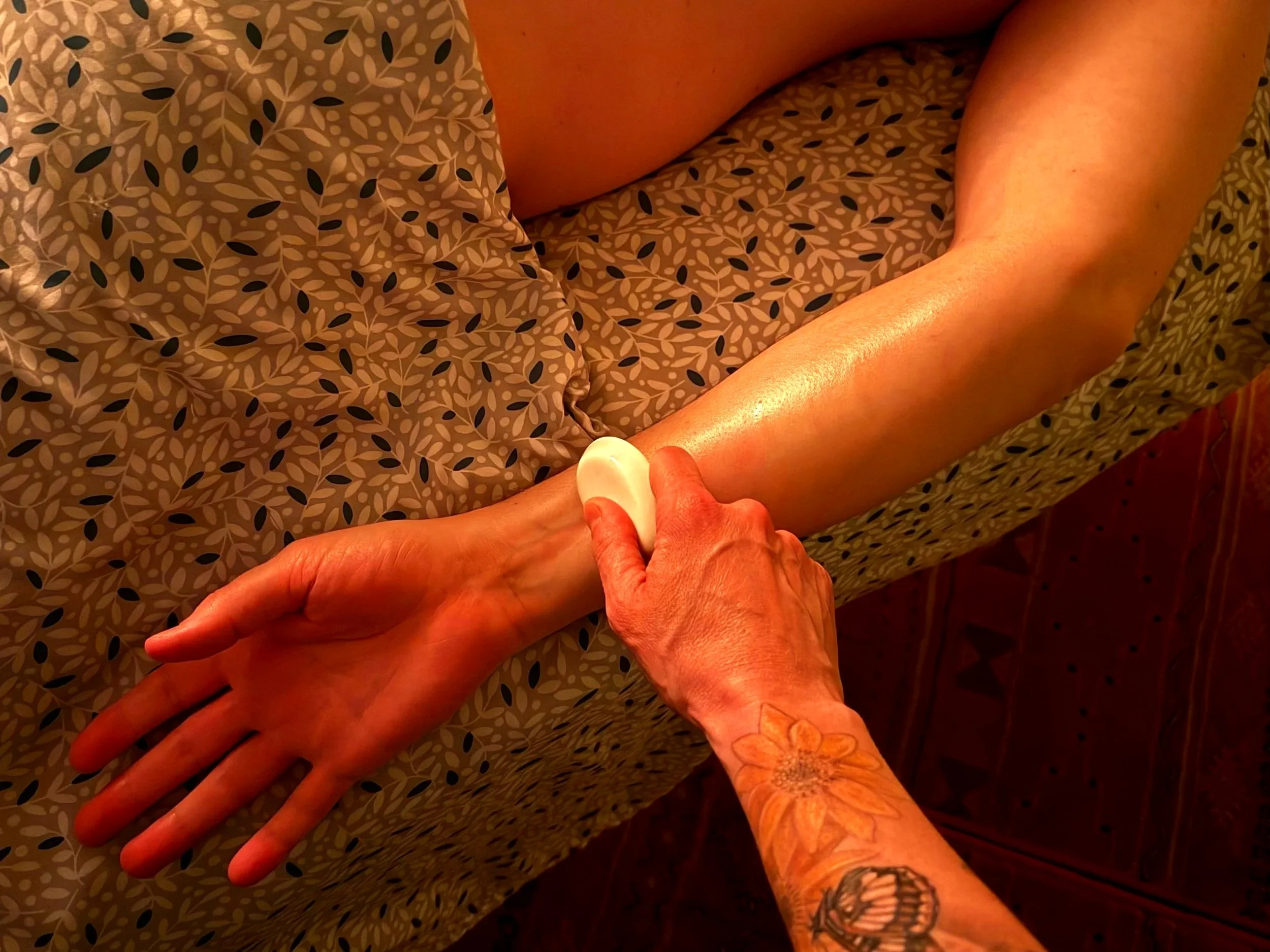
Gua Sha uses a smooth-edged tool to apply controlled, gliding strokes along the skin, helping to improve circulation and release areas of tension or restriction. In my NE Portland massage practice, Gua Sha is used as a targeted technique within sessions to address areas of tightness, adhesion, or reduced mobility.
Unlike cupping, which lifts the tissue, Gua Sha works by gliding along the muscle and connective tissue to help break up restriction and improve movement. It is especially useful in areas that feel dense or resistant, and can be effective when working with scar tissue, tendon irritation, and other forms of connective tissue restriction.
Gua Sha has roots in traditional East Asian medicine and has been used for centuries to address pain and promote circulation. In a contemporary massage context, it functions similarly to instrument-assisted soft tissue techniques - using the edge of a tool to create specific friction along the tissue that hands alone can't replicate. The result is often improved mobility and reduced tension in areas that have been slow to respond to other work.
How is Gua Sha Used?
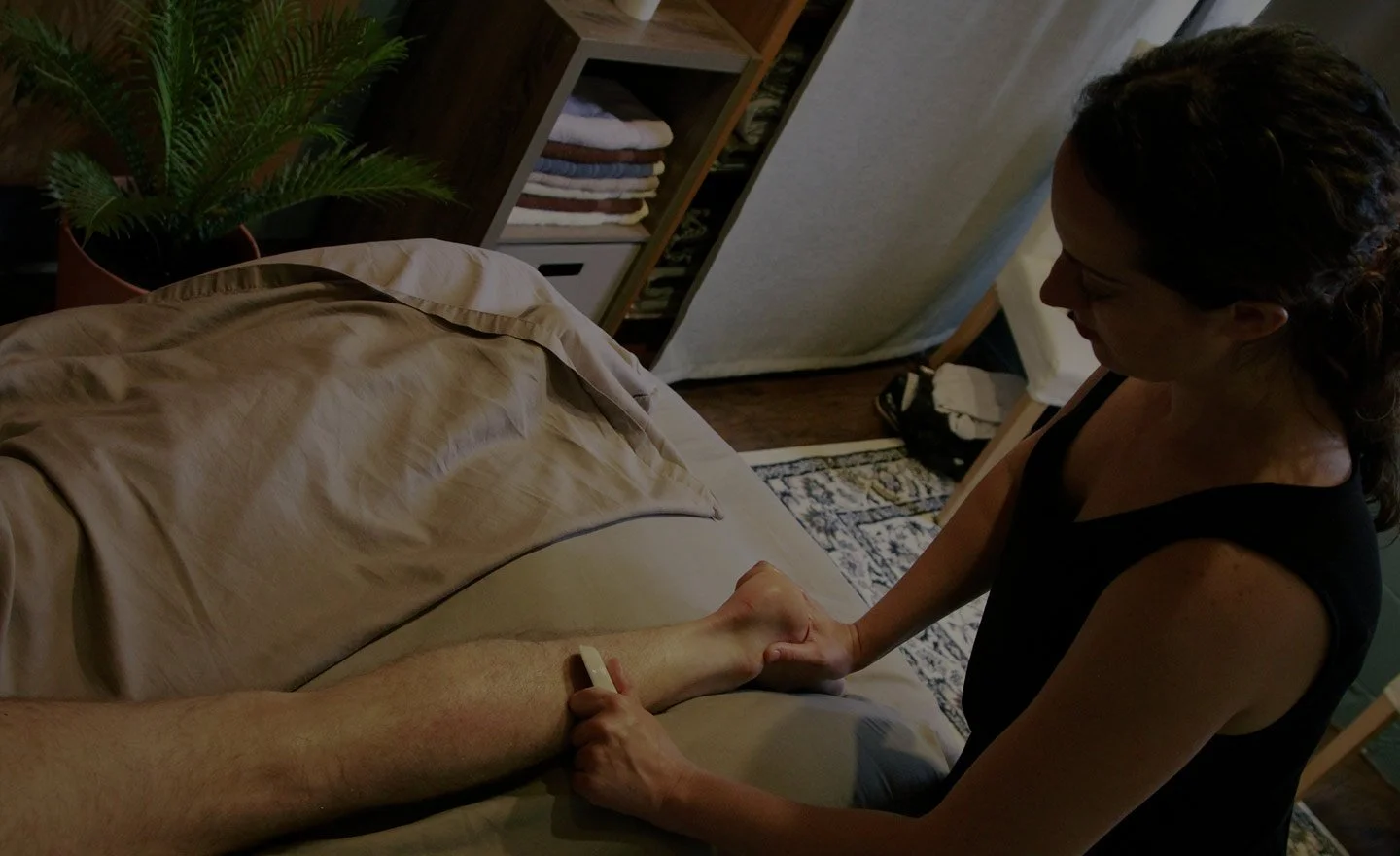
Gua Sha is incorporated into a session when an area would benefit from more direct work along the tissue.
Typically when muscles or connective tissue feel dense, layered with adhesion, or restricted in a way that broader massage strokes aren't fully reaching. It works well alongside other techniques such as myofascial release and deep tissue massage, and is often used on the upper back, neck, shoulders, forearms, and along the IT band or calves.
Steph is so talented and so kind. She really understands the importance of working not just problem areas but the areas around it, that contribute to soreness and pain. My first visit I went in for very intense lower back pain, and she not only helped me loosen the muscles but worked with me to stretch and continue to improve habits to prevent more pain. My second visit I went for neck tension that was affecting my jaw and headaches. She is both gentle but firm, and very good at communicating what she is doing and what to do if you are in pain.
I am very impressed with her techniques, attention to detail, professionalism, and her response to my needs. Highly recommend, and support a local business!!
— Stephanie G.What to Expect
Gua Sha may create temporary redness or discoloration on the skin, which typically fades within two to seven days. This is a normal response to increased circulation in the area, and marks may last longer depending on the intensity of the treatment and the individual's healing process.
If you've never had Gua Sha before, it's worth knowing that the discoloration can look more dramatic than it feels. I'll always explain what I'm doing before I use the tool and check in throughout, so you're never caught off guard.
Booking a Session
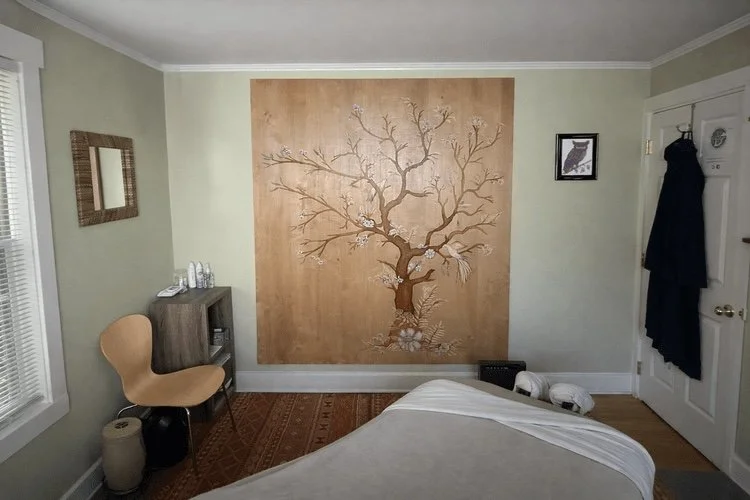
If you're in Portland and dealing with an area of chronic restriction, adhesion, or slow-healing tissue irritation that hasn't fully responded to other work, it may be worth incorporating into your next session.
Gua Sha Can Help To
Release chronic muscle tension
Improve mobility in restricted areas
Address adhesions and connective tissue tightness
Support recovery from repetitive strain
Work with scar tissue and tendon-related irritation
Frequently Asked Questions
Does Gua Sha hurt?
It's designed to be therapeutic, not painful. The pressure and intensity are always adjusted based on your feedback and how your tissue responds. Some people notice a mild scraping sensation or moderate pressure along the area being worked — most find it tolerable, and many find it relieving. If anything feels too intense, the technique can be modified immediately.
What's the discoloration I've heard about?
Gua Sha can create temporary redness or marks on the skin that typically fade within a few days, though this varies by individual and session intensity. It's a normal response to increased circulation in the tissue — not an injury. The discoloration can look more significant than it feels. You'll always know when Gua Sha is being used, and I'll check in throughout so nothing comes as a surprise. If you have an upcoming event where visible marks would be a concern, mention it beforehand and we can plan around it.
How is Gua Sha different from cupping?
Both address restriction and improve circulation, but they work in opposite directions. Cupping lifts and decompresses the tissue. Gua Sha glides along the tissue, creating specific friction that helps break up adhesion and restriction. They can complement each other well, and the choice between them — or combining both — depends on what your tissue needs.
How is it different from regular massage?
The edge of the Gua Sha tool creates a type of friction along the muscle and connective tissue that hands alone can't replicate. This makes it useful for areas that feel dense or layered in a way that broader massage strokes aren't fully reaching — particularly scar tissue, tendon irritation, and stubborn adhesions.
What areas of the body is it most commonly used on?
It's often applied to the upper back, neck, shoulders, forearms, IT band, and calves — areas that tend to accumulate dense or chronic tension. That said, it can be used wherever it would benefit the work in a session.
Can Gua Sha help with scar tissue or tendon problems?
Yes — it can be particularly effective for both. The tool allows for very specific work along scar tissue and connective tissue restriction, and it's often used for tendon-related irritation that hasn't responded fully to hands-on work alone.